Urban Garden Award 22:
Urban Sustainability Corridor
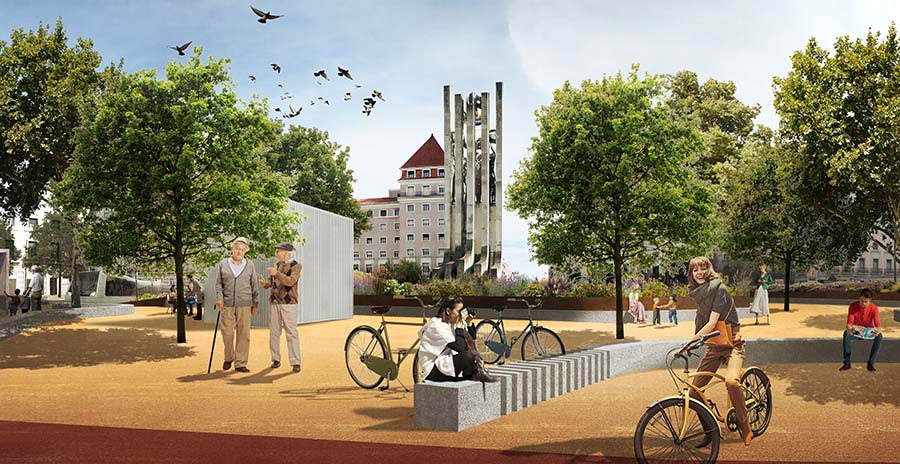
1st Prize in the international landscape architecture competition Urban Garden Award 22: “Urban Sustainability Corridor – from the Port to the Airport”.
Collaboration with Premissa: Architect João Francisco Coelho, Landscape Architect Joana Azevedo, Landscape Architect Camila Feital.


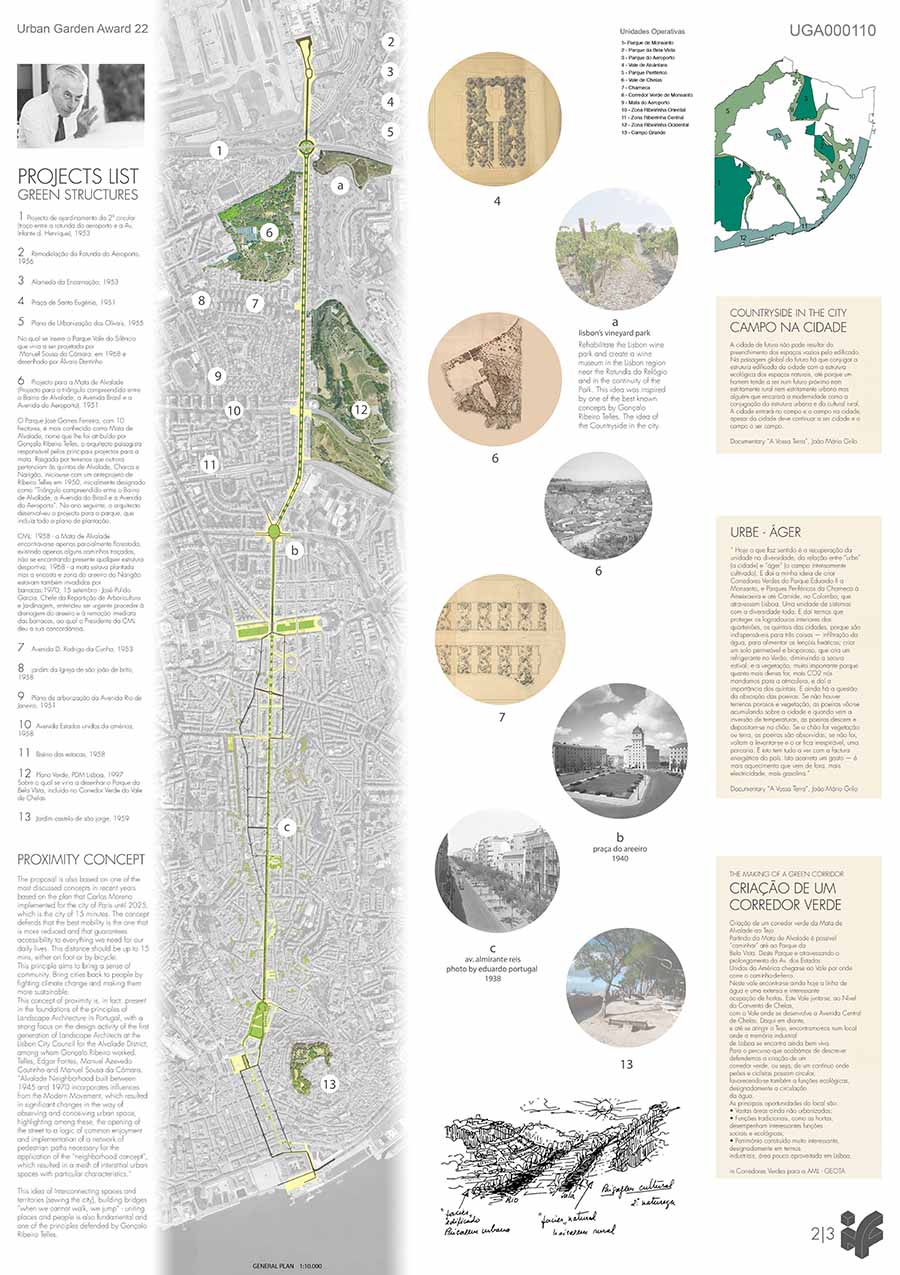
Our project began by reflecting on the historical context of these areas of Lisbon, as well as understanding the teachings and projects of Gonçalo Ribeiro Telles within the city and the boundaries of the intervention area through a historical survey. These projects remain landmarks in the city today and have, in one way or another, influenced subsequent decisions regarding urban development, contributing to the quality of Lisbon's urban environment. They include the Gardens of the Calouste Gulbenkian Foundation, the Gardens of São Jorge Castle, the Bairro das Estacas project, the interventions in the Alvalade neighbourhood and woodland, the projects for Alameda da Encarnação and Praça de Santo Eugénio, the tree planting along several avenues throughout the area, and finally, the concept of Green Corridors and the protection of floodplains.
Mobility
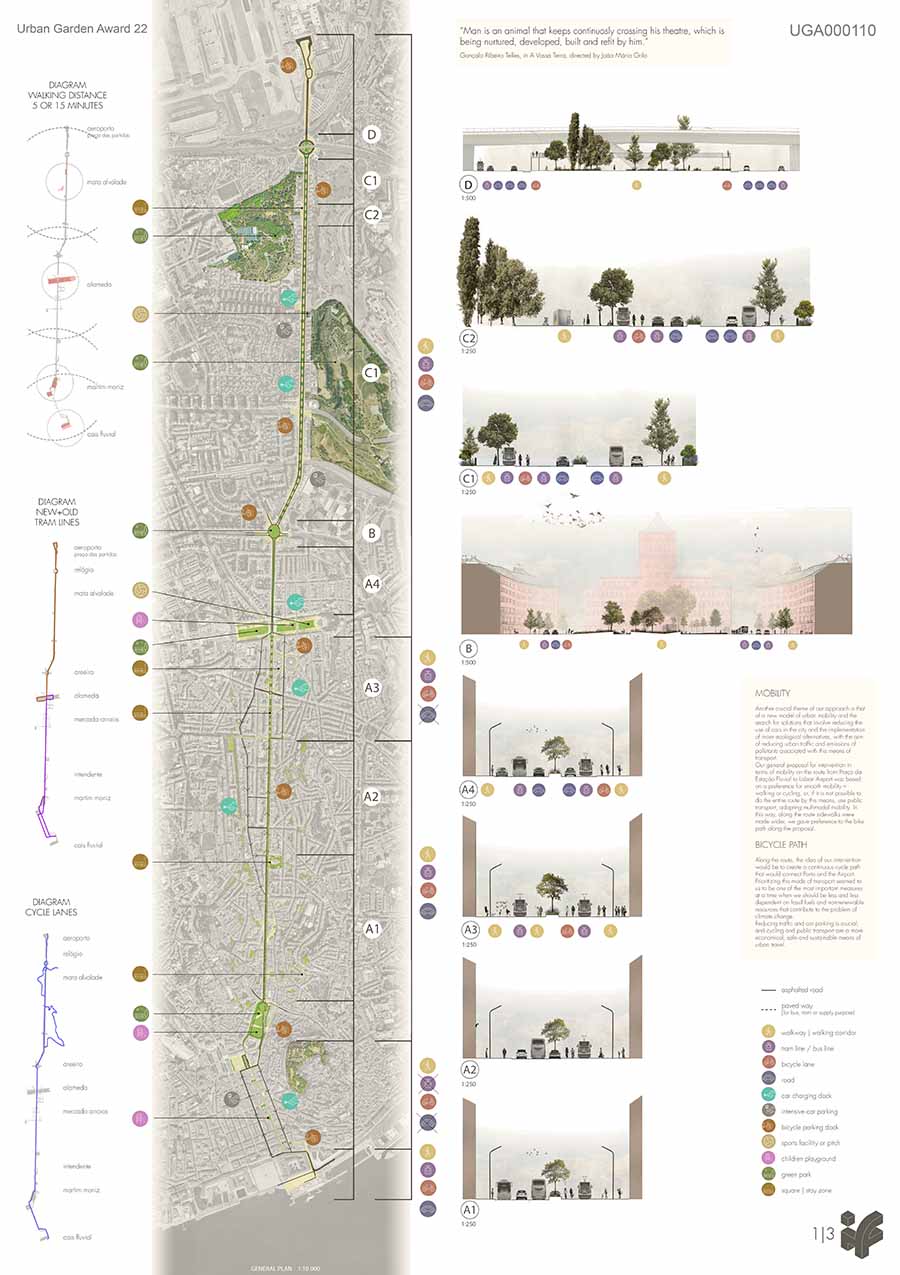
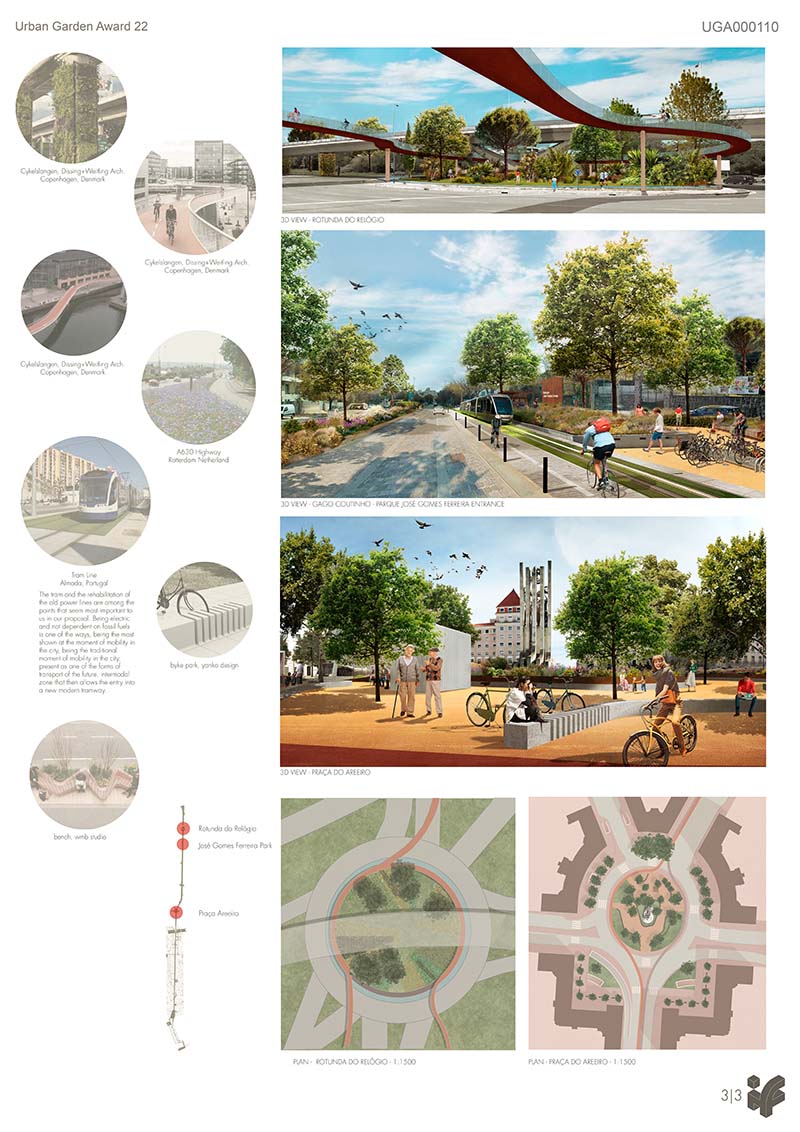
Another crucial aspect of our approach is the development of a new model of urban mobility, seeking solutions that reduce car use within the city and introduce more environmentally friendly alternatives. Our overall mobility proposal for the route between Praça da Estação Fluvial and Lisbon Airport prioritises active mobility, namely walking and cycling, complemented by public transport when the entire journey cannot be completed by these means, thereby promoting multimodal mobility.
Throughout the route, we propose widening pavements and prioritising cycling infrastructure.
Pedestrianisation
The proposal also draws on one of the most widely discussed urban planning concepts of recent years: the 15-minute city, developed by Carlos Moreno and incorporated into Paris's urban planning strategy towards 2025. The concept advocates that the best mobility is the mobility we need the least, ensuring access to everything required for everyday life within 15 minutes, whether on foot or by bicycle. This principle aims to strengthen the sense of community, return cities to their inhabitants, address climate change and make urban environments more sustainable.
This concept of proximity is already embedded in the fundamental principles of landscape architecture in Portugal, particularly in the work of the first generation of landscape architects at Lisbon City Council on the Alvalade neighbourhood. Among them were Gonçalo Ribeiro Telles, Edgar Fontes, Manuel Azevedo Coutinho and Manuel Sousa da Câmara.
"The Alvalade neighbourhood, built between 1945 and 1970, incorporates influences from the Modern Movement, which brought significant changes to how urban space was perceived and designed.
These included opening up courtyards for communal use and implementing a network of pedestrian routes essential to the application of the 'neighbourhood concept', resulting in a network of interstitial urban spaces with distinctive characteristics."
This idea of connecting spaces and territories, stitching the city together and building bridges, "when we cannot walk, we jump", bringing places and people together, is also fundamental and represents one of the principles advocated by Gonçalo Ribeiro Telles.
Cycle Paths
Our intervention proposes the creation of a continuous cycle path connecting the Port to the Airport. Prioritising this mode of transport seemed to us one of the most important measures at a time when we should be increasingly reducing our dependence on fossil fuels and non-renewable resources that contribute to climate change.
Public Transport
O elétrico e a reabilitação das antigas linhas de elétrico são outros dos pontos que nos pareceram importantes realçar na nossa proposta. Sendo elétrico e não dependente de combustíveis fósseis é das formas mais sustentáveis neste momento de mobilidade na cidade, sendo indicada como uma das formas de transporte do futuro.